Trilobal profile
Three lobes are proposed to increase directional edges and surface exposure compared with a round filament.
Fiber architecture as a design variable
DiatomWeave is exploring whether manufacturable fiber geometry can create a repeatable physical interface within a textile. The mechanism is proposed—not proven.
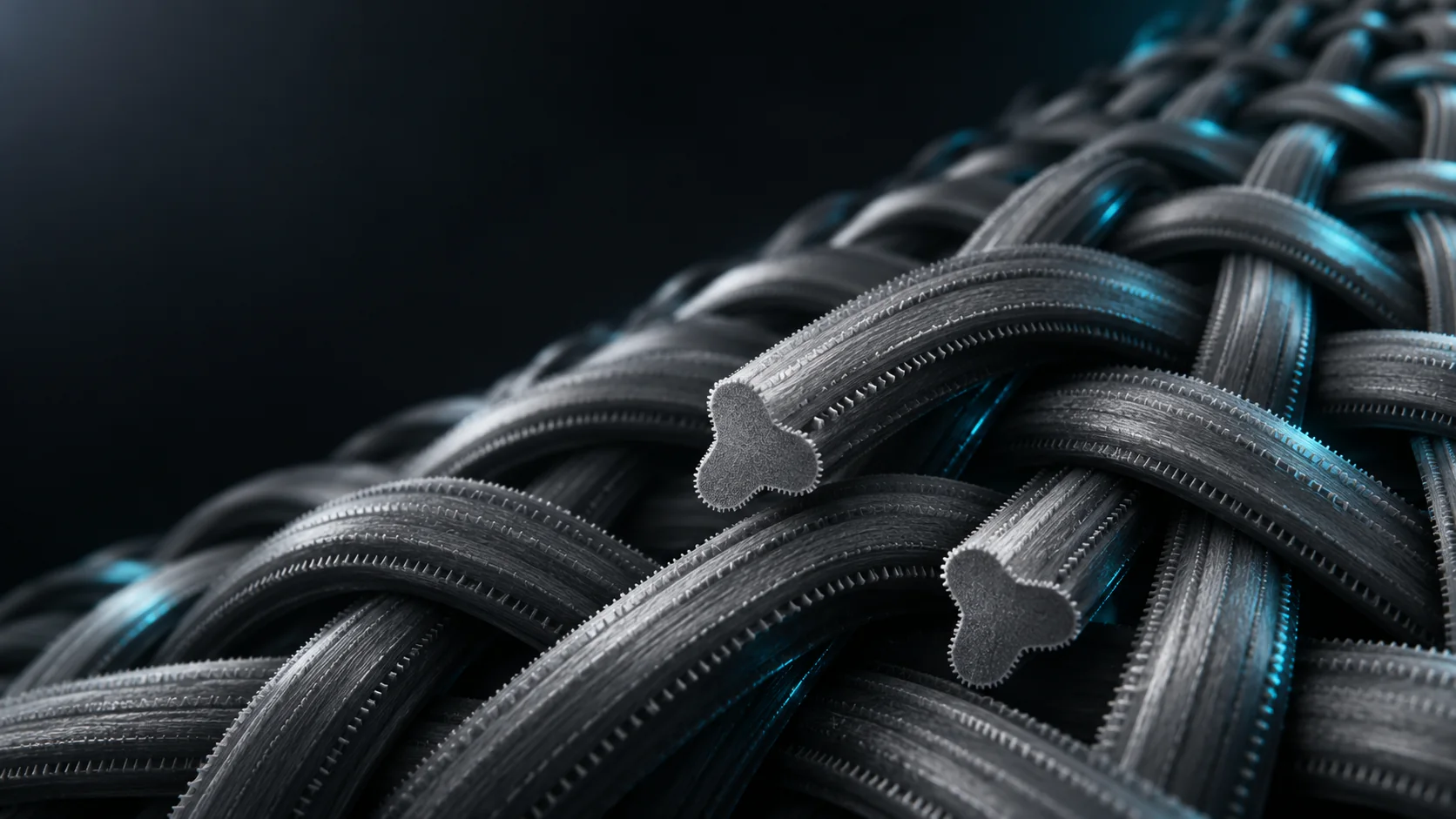
Conceptual visualization. Geometry is illustrative and not a verified micrograph, production specification, or tested prototype.
Three lobes are proposed to increase directional edges and surface exposure compared with a round filament.
Fine, repeating features are envisioned as part of the continuous fiber—not loose particles or an applied insecticide.
Yarn assembly and weave structure would determine whether functional geometry remains accessible in the finished material.
Proposed mechanism
The working hypothesis is that controlled microgeometry could mechanically interact with an insect cuticle and potentially contribute to moisture loss. That chain of events has not been demonstrated for DiatomWeave.
Technical collaboration
We are seeking fiber-forming, textile engineering, microscopy, and independent testing capabilities.
Discuss technical fit